Summary Iran targets a US military installation in Bahrain as Trump rejects negotiations, Israeli military concerns grow and Strait of Hormuz tensions escalate.
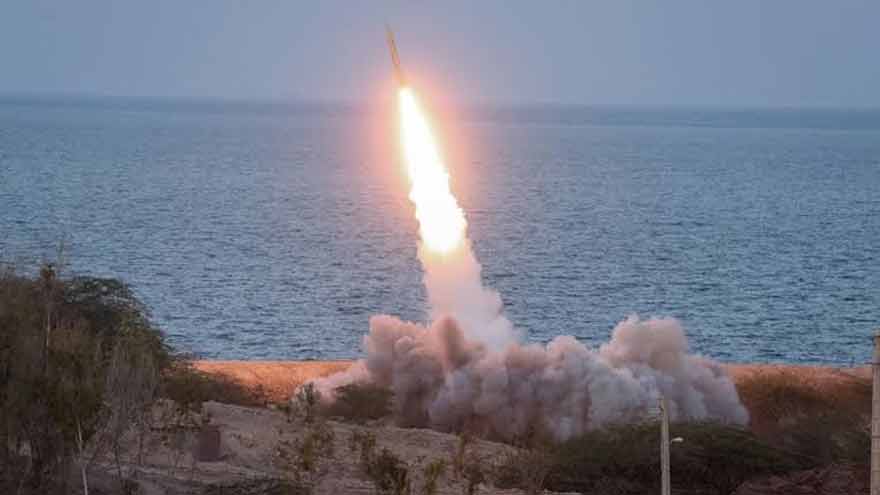
TEHRAN (Web Desk) - Iran has claimed responsibility for targeting a US military installation in Bahrain, marking its first attempt to strike an American military facility in a Gulf state in more than two months, as diplomatic hopes for an agreement between Washington and Tehran continue to fade.
Iran said the attack early Friday was carried out in retaliation for what it described as an American strike on Iranian territory.
However, US Central Command (CENTCOM) said American forces intercepted and shot down two Iranian drones heading towards Bahrain. It reported no injuries or damage.
In a statement carried by the semi-official Tasnim news agency, Iran's Islamic Revolutionary Guard Corps (IRGC) said its aerospace forces had targeted and destroyed an early-warning radar system belonging to the US military in Bahrain.
The IRGC described the operation as a response to an alleged American attack on a communications tower in Sirik, Iran, and issued what it called a serious warning to Washington.
CENTCOM rejected Iran's claim that a radar system had been attacked, describing the allegation as false.
The latest exchange comes amid continued military tensions around the Strait of Hormuz. While the United States has carried out strikes against Iranian targets in the area in recent weeks, Tehran had largely avoided attacking American military installations in Gulf countries since early September, concentrating instead on disrupting maritime traffic.
Israeli Spy Chief Visits Washington
Meanwhile, Israeli intelligence chief Roman Gofman was in Washington on Friday amid growing concerns over a possible renewed military confrontation between Israel and Iran.
The visit comes as Israeli Prime Minister Benjamin Netanyahu has reportedly been pressing the Trump administration to resume military operations against Tehran.
According to two Israeli sources, Netanyahu has also considered launching a unilateral strike against Iran, although such an operation would require approval from US President Donald Trump.
Gofman was expected to meet CIA Director John Ratcliffe, according to a source familiar with the matter. His visit was first reported by Axios.
The possibility of Israel taking military action independently has reportedly raised concerns within the country's political establishment. Netanyahu's main rival, Gadi Eisenkot, demanded and received a security briefing from the prime minister on the issue.
Trump Says US No Longer Needs Deal with Iran
The Iranian attack came a day after Trump declared that Washington no longer needed an agreement with Tehran and directed Vice President JD Vance to focus on domestic issues.
“We don't need a deal with Iran. Those days have long since passed!” Trump wrote on his Truth Social platform.
He also claimed that the United States had secured Iran's financial resources and control over the Strait of Hormuz.
Trump subsequently instructed Vance, who had been leading negotiations with Iran, to redirect his attention towards addressing corruption and crime in Democratic-led states and cities.
Despite the increasingly hostile rhetoric, Trump has so far refrained from ordering a renewed military offensive against Iran, maintaining that his economic pressure campaign has weakened Tehran.
Netanyahu, meanwhile, has reportedly been pushing Washington to launch fresh strikes against Iran ahead of the US midterm elections.
Iran Rejects Prolonged State of Neither War nor Peace
Iran has warned that it will not accept an indefinite stalemate as the country faces mounting economic pressure from US sanctions and a naval blockade.
President Masoud Pezeshkian said on Monday that Supreme Leader Mojtaba Khamenei had instructed his government to end the existing state of neither war nor peace.
Pezeshkian said Iran could negotiate with dignity and bring the conflict to an end on its own terms.
His remarks indicate that Tehran remains open to negotiations, although tensions between the two countries continue to complicate diplomatic efforts.
Attacks in Strait of Hormuz Reach Record Levels
The latest confrontation comes as attacks on commercial shipping in the strategically important Strait of Hormuz have increased sharply.
According to Lloyd's List, 37 vessel attacks were recorded in October, marking the highest monthly total since the conflict began. At least 14 additional attacks were confirmed in November, according to the maritime intelligence publication.
Despite the growing security risks, oil shipments have continued through the waterway, with Middle Eastern exports recovering faster than global oil demand.
The International Energy Agency said Friday that the global oil market was showing tentative signs of rebalancing, with worldwide supplies exceeding demand for the first time since the outbreak of the Iran war.
Iran has warned that any further escalation could trigger a significant expansion of its military response, potentially extending attacks against US interests as far away as Europe.