Summary Mian Amer Mahmood has urged practical steps to improve life for 250m Pakistanis, stressing better governance, stronger local governments and smaller administrative units to facilitate public service.
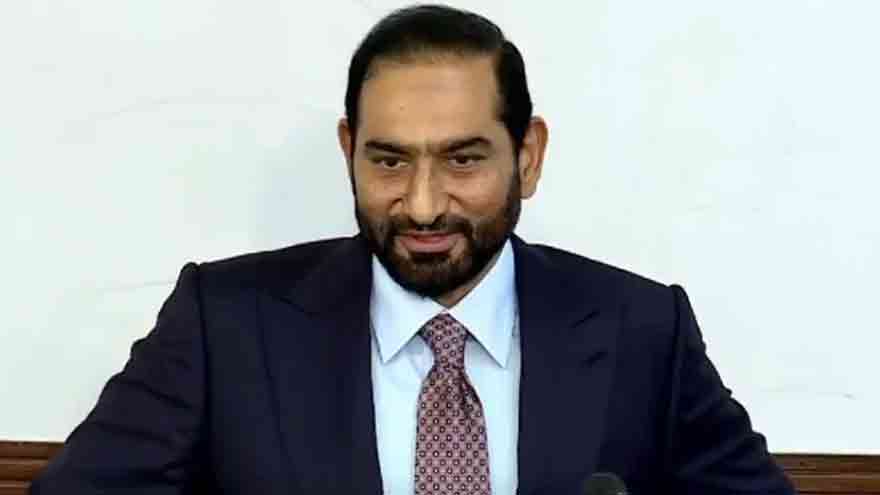
LAHORE (Dunya News) - Mian Amer Mahmood, chairman of Dunya Media Group, has called for practical measures to improve the lives of Pakistan’s 250 million people, stressing the need to focus on public welfare and the delivery of essential services.
Addressing officers undergoing training at the Pakistan Administrative Services Academy, Mian Amer said the country had not achieved the level of development it was capable of attaining.
He said he had started writing about smaller administrative units in 2008, clarifying that the discussion was not about dividing Pakistan but about exploring ways to improve governance and facilitate citizens.
Emphasising the importance of public service, he said local governments should play an effective role in serving people and addressing their needs.
Mian Amer added that his discussion had not involved personal or political matters. He also highlighted the importance of asking questions, saying that doing so makes it easier to understand issues and their underlying complexities.
Referring to Pakistan’s administrative structure at the time of independence, he said the country had been given four provinces in 1947, while East Pakistan constituted the fifth part and no longer exists as part of the country.
The Dunya Media Group chairman said the situation in Balochistan, coupled with the vast distances between areas, was creating challenges for law enforcement agencies. He noted that following a terrorist incident in a remote area, it could take the administration an entire day to reach the location.
He said clear, data-driven answers to these challenges remained elusive, with discussions often dominated by emotional slogans rather than practical solutions to the underlying problems.
He said that when concerns about administrative boundaries and governance were raised, the response often centred on the argument that Pakistan would not be divided because the motherland was like a mother.
Mian Amer noted that such emotional responses did not provide clear answers to the underlying issues. He also highlighted that provincial boundaries and administrative jurisdictions had continued to change over time.
Calling for smaller administrative units in Pakistan, he argued that the existing governance structure has failed to deliver balanced development and essential public services across the country.
He said other countries had continued to establish smaller administrative units, while Pakistan had retained its traditional provincial structure. He argued that the country continued to lag in human development, pointing to child malnutrition, out-of-school children and inadequate public services.
Mian Amer said around 40 percent of children in Pakistan suffered from impaired growth, while the country also had the world’s highest number of children out of school. He warned that these challenges were affecting not only the present generation but also the country’s long-term future.
He further argued that development over the past eight decades had largely concentrated in capital cities, leaving many other regions struggling with poverty and limited access to education and healthcare. Referring to conditions outside Lahore, he said some areas faced levels of deprivation comparable to those in Balochistan.
Highlighting the water crisis, Mian Amer said untreated sewage was being discharged into rivers, while communities in southern areas relied on canal and river water for drinking. He questioned the effectiveness of water filtration plants, claiming that 99.9 per cent were not functional.
Education was another major concern. He claimed that 97.2 per cent of schools lacked subject-specialist teachers and questioned whether a system managing 60 schools from Lahore could provide effective oversight. He also referred to teacher shortages caused by retirements and raised concerns about recruitment practices in the provinces.
On the justice system, Mian Amer criticised delays in criminal cases, claiming that murder trials could take 17 to 18 years to conclude. He said prolonged proceedings placed heavy burdens on both the accused and the complainants’ families. He added that Parliament would have to play a central role in improving the system.
Mian Amer advocated reorganising administrative boundaries along divisional lines. Under his proposed arrangement, Punjab would have 10 units, Sindh seven, Khyber Pakhtunkhwa eight and Islamabad one.
He also questioned the quality of educational and healthcare facilities in Faisalabad, which he described as Pakistan’s third-largest city, arguing that its size had not translated into adequate public infrastructure.